
3I/Atlas Unveiled: New Radio Signals and Mysteries from the Interstellar Comet.
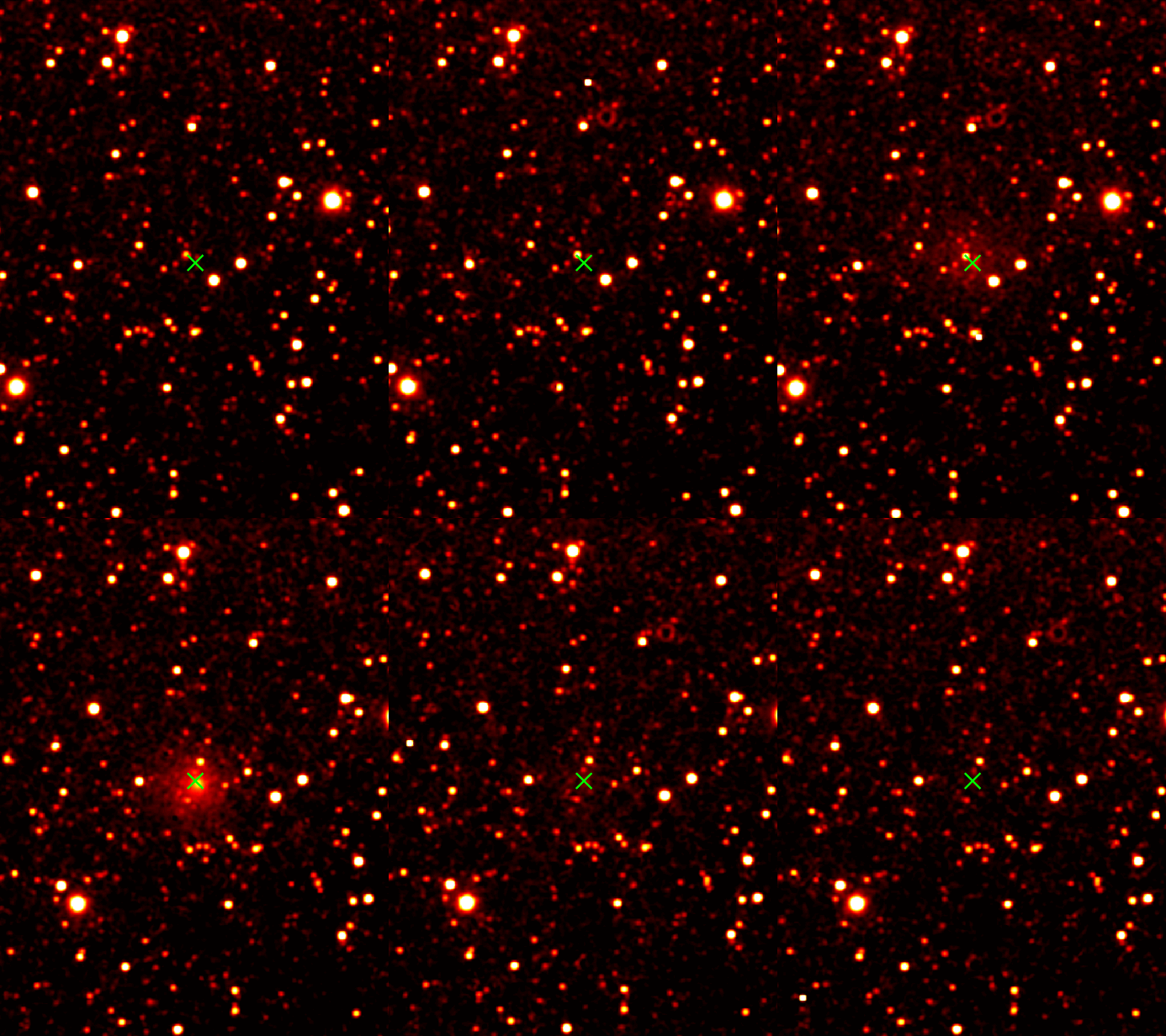
Image Credit: NASA
Excitement is mounting in the astronomical community with the latest developments surrounding the interstellar comet 3I/Atlas, observed to reveal surprising new features in just the last few hours. This cosmic traveler, originating from outside our solar system, continues to baffle scientists and ignite curiosity worldwide.
Recent observations confirm that 3I/Atlas remains a single intact body, defying earlier expectations of disintegration after its close approach to the Sun. Its tail has been growing at an accelerated rate, emitting stunning ionized gases that light up the night sky in unprecedented ways. This activity is particularly intriguing because water vapor and chemical emissions have been detected much farther from the Sun than usual cometary activity permits, suggesting unknown processes at work.
The most groundbreaking revelation in the past hours is the detection of radio signals originating from the comet. This marks the first time such emissions have been recorded from an interstellar object, definitively proving that 3I/Atlas is natural in origin, not an artificial object. The radio signals provide insights into the composition and behavior of this mysterious visitor and represent a milestone in interstellar object research.
Scientists worldwide are now intensively studying these signals and the comet’s unusual trajectory—unlike anything seen before—indicating it was formed in an entirely different star system. As 3I/Atlas approaches its closest distance to Earth slated for December 19, 2025, research efforts are amplifying to decode the chemical and physical secrets it carries from the distant cosmos.
3I/Atlas continues to be a cosmic enigma, offering an extraordinary glimpse into the universe beyond our solar neighborhood and fueling hopes of understanding the origins of life and matter at a galactic scale. These fresh findings in the last few hours promise an exciting journey of discovery for all stargazers and scientists alike.
Share this:


 What Now News 24